Monday, May 25, 2020

How HAM can be an effective tool for growth of the Indian Economy?


Abstract 

This article focuses on the concept of the Hybrid Annuity Model which comprises of two existing models. It gives light on how this model can be a tool for economic growth and development of the Indian Economy. It highlights the advancements and needs for implementing such a model for the benefits of the government, developers and investors. It also speaks about the reasons behind implementing such a model. 

Keyword(s): Hybrid Annuity Model, economic growth, Indian Economy;

Introduction

Transport minister Nitin Gadkari actively promoted his brain-child — the Hybrid-Annuity Model or HAM. Introduced in January 2016 to revive investments in road infrastructure projects, HAM has seen good initial success. About 30 highways projects have been awarded under HAM by the National Highway Authority of India (NHAI) at a total cost of about ₹28,000 crore. Half the projects awarded in 2016-17 were under HAM

Literature Review

The concept of Hybrid Annuity Model (HAM) was brought in to rejuvenate the Public Private Partnerships in highway construction. HAM is a model that is consisting of two more existing models, that is, BOT Annuity and EPC. To understand the concept of HAM, we need to understand these two models. 

1. BOT or The Build Operate and Transfer Annuity Model
Under such kind of model, the developer builds and operates the highway for a certain period of time and returns it to the government. When this asset is used for commercial purpose, the government pays the developer a considerable amount. 

2. BOT Toll Model
Under this model, the developer is allowed to recover his investment through the tolls collected from the highway. 

3. Engineering, Procurement and Construction Model
Under this model, all the costs relating to engineering, procurement of raw materials and the construction is borne by the government itself. A huge financial burden is imposed on the government. 
In financial terminology, hybrid annuity refers to those payments that are made in fixed instalment up to a certain time period and becomes variable henceforth for the remaining period. Such a payment method is followed under HAM.  As per the model, the government contributes about 40% of the project costs in the first five years of the project. The rest 60% will be paid in variable amounts as per the value of the asset after construction. The developers, in return, invest about 25 percent as equity and raise the balance as debt. Under HAM, the revenue collection is done by National Highway Authority of India (NHAI). 

This model is expected to lower the initial capital outflow for the government, as bulk of the payment will be done through annuity payments. Further, the private entity will be insulated from traffic and inflation risks, as these will be looked after by the government.

 
Reasons for implementation of HAM

1. It would help in improving the financial mechanism in the road development sector. 

2. Return of the old contractors
Leading developers, including Larsen and Toubro Ltd, IL&FS Transportation Networks Ltd (ITNL), GVK Power and Infrastructure Ltd, GMR Infrastructure Ltd, IVRCL Ltd, Gammon Infrastructure Projects Ltd and Hindustan Construction Co. (HCC) Ltd, were no longer actively participating in road construction bids as their balance sheets are stressed. To bring back such developers back into the market the model was implemented as the cost is shared between the developer and the government. 

3. No aggressive bidding
 In spite of the lower equity investment requirement and the minimal revenue risks in this model, many existing companies with hugely stressed balance sheets may still struggle to participate in these bids because any incremental equity outlay and project finance may be beyond their present means. It will also see new and small companies bidding for highway projects instead of focusing on EPC opportunities.

4. Stress-free lending
Lending for hybrid annuity-modelled projects would be comparatively easier as there is no traffic risk associated. Lenders would be comfortable as the execution risk is less for contractors as the bidding rolls out only after 90% land is available

Development of HAM
The visibility of high visibility of projects are to be implemented over five years, worth around Rs5.35 lakh crore for 35000km. The bid project cost remains at around Rs23-35 crores. Further, the L1 (lowest) bids are on average 15 per cent higher than NHAI’s estimated EPC costs, though the difference between L1 and L2 bidders has doubled to 8 per cent last fiscal from 4 per cent in FY17. 

  
HAM has become the preferred contract for the NHAI, rising from less than 10 per cent of awards in FY16 to nearly 50 per cent in FY18. The represents an order award value growth from ₹7,000 crore to ₹76,500 crore in just three years.  the Ministry of Road and Transport (MoRTH) awarded projects of around 17,000 km, of which 7,397 km was awarded by NHAI.
 
How it is an effective tool for the growth of Indian Economy?
HAM facilitates capital inflows. This means that the economy would increase in its productive capacity without having much inflation from this sector. It also helps to give more liquidity in the market. Liquidity in such an illiquid market is very important for the economy. This gives the developers confidence on the market and they are eager to contribute to such projects. As the cost burden is divided between the government and the developer, the entire burden does not fall on the government which helps them to save revenue and they can use it in productive purposes which would be beneficial for the general public. The government has to bear the financial risk partly which does not become a burden on the economy as a whole. It propagates foreign or international contractors to contribute to such projects which eventually is beneficial for the economy. HAM was introduced to help the well-placed construction companies with lower debit and better financials to secure their order books. The idea was to bring in responsible and seasoned players that would be accountable enough to secure and execute projects. This also helps investors to invest in such projects in the long run. This induces FDI which is quite beneficial for the economy as well. It will facilitate uplifting the socio-economic condition of the entire nation due to increased connectivity across the length and breadth of the country leading to enhanced economic activity.

- NANDINI SIL 
FOR ECOBUZZ

Sunday, May 24, 2020

The Poor Children in the Corona Mayhem


             Image source : BBC news


The novel Coronovirus has sent the world into a chaos. It is so unprecedented that many of us still are wondering, while sitting at home, whether this is a dream or not. Is this is just a bad dream and we will wake up to a “normal day” tomorrow and live our “normal lives” again? Sadly, the deadly virus sets a new precedent and we are having a “new normal” accosting all of us. With widespread containment measures, stalling all economic and social activities, the world will never be the same, at least for the foreseeable future. While this is being addressed as nature’s way of damage repair and reclaiming itself from the prolonged tortures of human beings, the fallouts that the economies and human lives will face will definitely not be pleasant. It is a privilege to be at home and research on the Covid-19 issues while many of the world’s population are facing the worst times of their lives. Specially the children; the poverty struck children.
Whilst the coronavirus has so far reported less severe cases among children, it can decimate their lives in a different way. The ‘physical distancing’ measures increasingly result in parents not being able to work, as usual businesses are rapidly grinding to a halt across the world.  Meanwhile traditional care providers – schools and nurseries – have had to close. Even as the spread of the virus slows in some countries, its social toll will come fast and hard. And in many places, it will come at the expense of the most vulnerable children.  Such children are in millions, living in vulnerable communities in countries all around the world apprehending the sufferings from the far reaching economic and social impacts of the measures needed to contain the pandemic. 
 At the forefront are millions of girls and boys including those who have been uprooted by conflict, children living with disabilities and girls at risk of violence. Keeping in mind this population group, this health crisis risks becoming a child-rights crisis. Many children around the world, including those displaced by conflict, live in camps, informal settlements and on the streets. For them maintaining social distancing norms and complying with basic hygiene like washing hands is very difficult. Again, homes are not always a safe haven, particularly in times of financial stress. When families that are already dependent on casual, informal jobs, are laid off or are forced to isolate because of the COVID-19 outbreak, they have little to fall back on.  They have more debts than savings, and cannot afford to stockpile food and other necessities. A break in income can have devastating consequences. For families in poverty, missing work implies missing meals, making it hard to comply with government and health advice. These parents helplessly can’t set a good example for children who are looking up to them and can’t support them either. Many schools in poor countries are subsidized by the government to offer free meals during the school hours but with closing of schools, such options are not available now either. For children living with domestic abuse and gender-based violence, staying home can be a risk in itself.
The United Nations Children’s Emergency Fund (UNICEF) has chalked out a multipronged plan to help these vulnerable children in this crisis. It calls on governments and partners to sustain life-saving maternal, newborn and child health services. This means continuing to meet the urgent needs posed by COVID-19, while carrying forward critical health interventions, like funding for vaccinations, that ensure children survive and thrive. Hospitals should have provisions for treatment of other health issues -diseases like pneumonia, malaria and diarrhea- so that infants and children will not lose their lives to preventable causes.
Some children are cut off from safe water because they live in remote areas, or in places where water is untreated or polluted, like those living in slums or streets. With maintenance of good hygiene practices more important than ever, more girls and boys should be reached out to, with clean water and basic hygiene facilities. UNICEF calls upon governments to prioritize these universal sanitization measures.
As educators have come up with unconventional ways to keep the teaching-learning process going amidst the crisis, many children across the world do not have access to books or school supplies, let alone the internet. Governments have to scale up home learning options, pursuing no-tech and low-tech solutions to bridge the digital-gap, and prioritize internet connectivity in remote and rural areas. With more than 800 million children out of school, now is the time to direct national funding for education and not lag behind on constructing a brighter future for all of us.
As millions of parents struggle to maintain their livelihoods and income, tens of millions of children already living on the edge of hardship will fall into poverty, unless urgent steps are taken to combat the socio-economic impacts of this outbreak. Government must adopt security measures to protect jobs and to adequately support working parents. Instead of making direct cash transfers, there should be a provision for “conditional cash transfers” to make sure the money is spent for the intended purpose and not diverted into other areas of self-interest by the poor people, along with support for food and nutrition. The government really has to work credibly and transparently in these respects for the sake of overall welfare.
As already mentioned, while this “stay at home” policy is for the benefit of people at large, we have many little Samaritans who are putting their own lives at stake to not flout this protocol- the children who are subject to domestic violence and exploitation. They would rather be anywhere else but at home, right? Governments need to account for the unique risks of girls and vulnerable children, including those who face discrimination and stigma, when planning for social distancing and other COVID-19 response measures.
On a usual basis, refugee and migrant children and those affected by conflict, face unspeakable threats to their safety and well-being – and this in the absence of a pandemic. Access to basic health care facilities is undoubtedly very limited for them and their bare survival in cramped living conditions highlights the infeasibility of social distancing. It goes without saying that health systems in war-ravaged countries are already on the brink of collapse.  The United Nations Secretary-General has called for a global ceasefire to focus our fight on a common enemy, instead of against each other. It is up to the global community to prioritize humanitarian needs during this pandemic above all else, to come together in support of these children separated from their families and homes and uphold their rights and protect them from this virus.
We can’t paint a fine picture of the future barring the children of today, and expect it to come true.  They are the forerunners and makers of the future. For that, they need to be taken care of, protected, nurtured and educated. It is important to mention Greta Thunberg, the Swedish environmental activist who has received international acclamation for protesting against climate change, has started a fundraiser with Danish NGO Human Act to support UNICEF’s work to protect children’s lives during the Corona pandemic. The 17 year old says “We must now all act together to protect children and end the devastating consequences of the coronavirus. Children are the future and they must be protected.”  Thunberg is known for her youth and her straightforward speaking manner, both in public and to political leaders and assemblies. Despite having nemeses, she has fans among all age groups with many children admiring her as a role model. Keeping aside controversial opinions, she is a good example of a human for the future and we can have several others like her if proper plans are crafted and executed now. Crises and pandemics wreak havoc globally; the children should not be the worst sufferers.

- AARSHIYA BASU
MA ECONOMICS, 2ND SEMESTER
ST. XAVIER’S UNIVERSITY, KOLKATA

Wednesday, May 20, 2020

Why Couldn't COVID-19 prevail over God's own country?


Our goals can only be reached through a vehicle of a plan, in which we must fervently believe and upon which we must vigorously act. There is no other route to success. 

                    – Pablo Picasso


From motivating the public through press conferences to imposing restrictions and resisting the shocks, Kerala’s efforts are praiseworthy. Kerala invested a lot for its human capital over a long period of time, the literacy rate touches the sky the healthcare facilities are significant. Kerala’s political history states its in-depth linkage with communism. But when it comes development and welfare the ideologies are compromised. Kerala’s healthcare system is highly privatized with healthy division of labour between private and public sectors. Kerala even managed to cope up after the floods in 2018 due to its decentralized and effective system. Kerala also has one of the highest doctor-patient ratios in the country. The doctor-patient ratio in the state, which nearly stands at 1:400, which is much higher than the World Health Organization recommended 1:1000.

Kerala also took lessons from its last experience dealing with the Nipah virus, which neither had treatment nor proper vaccine. The state recognized certain protocols like isolation, contact tracing and alert community surveillance system, which they also implemented during their war against the Corona Virus.

Even before nation wide lockdown, Kerala implemented various actions like shutting down schools and banning public gatherings. The mid-day meals were delivered to the children at their homes, this effort was admirable and was cherished by various eminent personalities.

god-rahul                     Source:VOANEWS

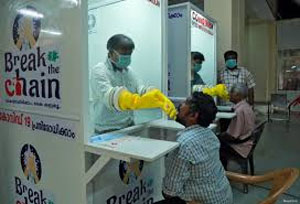
On 16th of march, Kerala launched “Break the chain” campaign to combat Covid-19 at its primitive stage. The main aim of the campaign was to educate people about importance of hygiene. This campaign to limit the spread of corona virus was undeniably successful. After certain amount of spread the district authorities prepared route maps of the infected people specifying the places they travelled after the initial symptoms were noticed. Kerala is quarantining people for 28 days instead of 14 days, as recommended by the center. The patients in quarantine were blessed enough to have choice of meals, wi-fi services and counselling. The anti-Covid task force led by renowned doctors and administrators used a hotline to provide stress relief to affected people.

At a point of time the state faced a shortage in supply of hand sanitizers due to excessive demand during the initial days and due to hoarding of the product. A Public-Sector Undertaking named Kerala State Drugs and Pharmaceuticals ltd assured the government that it would produce enough sanitizers for the state at a minimal rate of 125/- for a 500 ml bottle.

One of the most disgusting factor recognized during this lockdown period is spreading of rumors and fake news, it not only initiates unnecessary rivalries but it also affects out mental health. The government of Kerala not only asked the police to take strict actions against people who are behind the menace, but also launched its app GOK Direct.

The states multilayered combating policies including healthcare (not only physical but also mental), proper communication system and stringent policies helped it to set an example in front of the whole world during this time of global distress. The instance showed us the importance of government and public cooperation and over and above, the importance of well nurtured human capital. The war is not yet over but Kerala is very well prepared to defeat COVID-19.

- RAHUL SINHA FOR ECOBUZZ

Mail Id: srahul.27501@gmail.com

Monday, May 18, 2020

Fall in female LFPR and Gender pay gaps in India

Fall in Female LFPR and Gender Pay Gaps in India

There is growing literature about the  paradox between female literacy and female employment where female literacy is increasing but female labour force participation is decreasing . 

Labour force participation rate, or LFPR is the measure of proportion of a country’s working age population (who belong to the age group from 15 to 64 years) who are either working or actively looking for work.  The formula for calculating LFPR is labour force, that is, employed persons and unemployed persons who are actively looking for jobs divided by the total working-age population. 
LFPR(%) =  x 100
Source: World Bank 2017

In the case of India, it has been observed that the female LFPR increased in the early 2000s, followed by a rapid fall from 31.942% in 2000 to 25.012% in 2017 according to the modeled ILO (International Labour Organisation) estimate. 
Source: World Bank 2017

The female LFPR is a U-shaped curve. It suggests that the female LFPR falls in the early stages of economic growth and then eventually rises in the later stages. 

Education as a Factor

Male education is a factor for low female LFPR as their education is assumed to be a proxy for household income.. When men’s education rises, it is expected that men would be employed which would bring in sufficient wealth into the household. This factor thus results in women having an option of whether they wish to be a part of the labour force or not. It has been seen that as  household wealth increases,  female LFPR falls. Women having basic education have a higher probability of not exiting employment as compared to women having a secondary level of education. It is so because in the Indian job sector, especially in the service sector, women with secondary level of education do not have the required expertise to work under such circumstances. Discrimination through wages is also very prevalant. On the other hand, women having primary education generally enter into the labour intensive market such as manufacturing sector which in return helps the women to retain their jobs and therefore the LFPR does not reduce. 

Women who remain unemployed generally increase their education level andWomen having secondary education usually have higher levels of human capital and skills which should yield higher incomes. In India however, it is the opposite. Many educated Indian women are placed on the lower end of the U-shaped curve which can be drawn out when education and female LFPR is plotted.
Other factors such as higher enrollment of women in higher education and lack of jobs also lead to a fall in female LFPR. It has been examined by a study (Chatterjee et al, 2018) that there is a J-shaped relationship between female LFPR and education in India which states that as the secondary education increases, the female LFPR falls. This should not be the case. 

Social,  Cultural and Financial  Factors
In India, social customs and the caste system do not focus on ‘empowering’ women. It is generally assumed that domestic work has to be done by them. Women, in the disadvantaged classes, that is, Schedule Tribes(STs), Schedule Castes(SCs) and Other Backward Classes(OBCs) are observed to have greater employment in comparison to high caste women in rural areas. 

Another observation has been that women who belong to higher castes get multiple choices with reference to work whereas such choices do not exist for women of the marginalised sections of society.Women in rural areas tend to have higher probabilities of exiting from employment and lower probabilities of entering into employment if they belong to a wealthier household. 

Social norms also restrain women’s mobility and reduce female LFPR. 
For example, the presence of in-laws reduces the probability of exiting from employment. At same time, if there are quite a few elderly family members, it leads to an increase in the probability of women exiting employment, because the in-laws help in taking care of the children and therefore, women can go out of the house for work. but if there are elderly family members the female member of the family needs to take care of them too and hence cannot join the labour force. 

Economic Factors

The reduction of the female LFPR is also because of the transition of the Indian economy from an agrarian economy towards a service oriented economy. This transition ignored the creation of jobs in the manufacturing sector and in turn caused a shortage of jobs for the mid level educated women in the Indian economy. 


Gender Pay Gap

Another factor which contributes to low female LFPR is discrimination of gender on the basis of wages. There exists a huge gap in wages between the male and female workers. The wage gap is about 30 percent higher in rural areas and 24.3 percent higher in urban areas. There is a substantial difference of wages among workers, both male and female, in different regions, sectors and genders. The women in rural formal sector earn less than the males in the urban informal sector and women who are in the urban formal sector earn less than men in the rural informal sector according to the NSSO data. It has also been observed that the market faces a lot of imperfections which prevents the female from entering the labor market. The vocational skills imparted to women have not considerably made any changes in the LFPR making it low. On the other hand, males with similar skills are called in for jobs in the labor market.. 

Women also face wage discrimination in the traditional activities of the tertiary sector.It has been observed that due to low skill formation in women (as compared to men) there is such discrimination of wages. 


Policies and Recommendations

Studies have suggested and recommended policies which would help narrow the gap between such wage gaps and promote higher LFPR.  

Implemented Policies

The National Rural Employment Guarantee Act (NREGA) is an initiative by the government to boost female LFPR.  It was enacted in 2005 and guarantees 100 days of work per year. The initiative has had a major impact on the rural sector increasing both private and public employment.  

A new Ministry of Skill Development and Entrepreneurship has been established to organise and establish skill development schemes across different sectors and states in India. In order to increase the LFPR, the government has taken initiatives such as The Micro-enterprise Development Programme by NABARD to train women through Women Industrial Training Institutes, National Vocational Training Institutes and Regional Vocational Training Institutes. 

Legal Initiatives:

The Equal Remuneration Act, 1976 provides the basis to maintain equality between the wages earned by male and female workers. The Minimum Wage Act also helps  maintain a basic wage for the male and female workers without any discrimination. According to the legislature, both the Companies Act, 2013 and Factories Act 1948 have provisions which promote equality of females in the workplace. 

Policies Recommended to boost female LFPR

Rigid labour regulations would lead to a lower LFPR. It is important to make the regulations flexible at certain points which benefits the economy and enhances the female LFPR. The employment of women is restricted to only a few industries. Therefore, policies should be drafted in such a way which helps in increasing access of women into different sectors. This can be done by investing in diversified sectors and upgrading to high-end activities. 
Policies should also be implemented to develop infrastructural facilities like transport, housing, sanitisation facilities and so on. Security and flexible work hours for pregnant women should be available. 

The Self Help Groups or SHGs should formulate policies which benefit the members by having access to finance, market and enhancing employment. Such SHGs have the ability to influence laws at state and district level. These groups need to be organised vertically and horizontally according to their organisation structure to strengthen the rural population. Agriculture, which is still the largest employer of female labour, can be utilized as a source of economic growth and job creation if women are ensured ownership rights and control over lands, shift to high value-added crops, supported by other policy measures. 

Policies Recommended for Reducing Gender Wage Gap In India: 

To measure and control the disparity in the gender gap of male and female, the government should implement a robust and continuously mentoring wage level system in both the urban and rural areas. It should also strengthen the compliance towards equality and make gender pay gaps or GPG a punishable offence.  At the organisational level, the recruiters and selectors should make sure that the compensation and incentives, both financial and non-financial, are properly allocated towards both male and female employees without discrimation. Mechanisms should be transparent and robust in implementing and maintaining a threshold in order to minimise the GPG as much as possible. The Human Resource Manager should take into consideration few policies such as equality in promotion, bonus and other incentives in order to reduce gender inequality. At an academic level, vocational programs should be organised in order to sponsor women’s education and skill development with an unbiased approach.  

References
Sarkar, S., Sahoo, S., & Klasen, S. (2019). Employment transitions of women in India: A panel analysis. World Development, 115, 291-309.
Afridi, F., Dinkelman, T., & Mahajan, K. (2018). Why are fewer married women joining the workforce in rural India? A decomposition analysis over two decades. Journal of Population Economics, 31(3), 783-818.
Goldin, C. (1994). The U-shaped female labor force function in economic development and economic history (No. w4707). National Bureau of Economic Research.
Chatterjee, E., Desai, S., & Vanneman, R. (2018). INDIAN PARADOX: RISING EDUCATION, DECLINING WOMENS’ EMPLOYMENT. Demographic research, 38, 

Saturday, May 16, 2020

Is there a bright side of rural sector post lockdown?

Is there a bright side of rural sector post lockdown? 
-Sweta Shaw 

Yes, that’s true. Government & individual behaviours have changed to cope with COVID-19, and economic behaviour will change too. Agriculture & rural industry could be India’s strength.


source - giving compass


Farmers put wheat crop through a crusher in Uttar Pradesh

As India eases the lockdown, there is fear that nothing has been gained in the past few painful weeks rather months, and the novel coronavirus will started spreading again. Looking at liquor queues in urban India, it may be tempting to think so, but the fears may be overblown at the scale of the economy as a whole.
The behaviour of governments, individuals and businesses will reshape the Indian economy, and safer activities and locations will flourish more. If supported by the right policy framework, agriculture and rural industry could be one of India’s biggest strengths.
Epidemiological models predicted a larger number of cases and deaths across many countries than actually observed. In the absence of a vaccine, what explains this? Economists explain the phenomenon by changes in behaviour — of both governments and people — which fits the old intuition in economic analysis that agents respond to incentives.
John Cochrane, for example, presents a behavioural ‘SIR model’, in which the rate at which people transition from ‘Susceptible’ to ‘Infectious’ to ‘Recovered’ is shaped by their behaviour.
Amid the coronavirus lockdown across the country that brought economic activity to a near halt, the Modi government is expecting that agriculture sector could be a silver lining for the Indian economy as it is estimated to grow at a rate of 3 per cent for the year 2020-21, according to NITI Aayog.
NITI Aayog member Ramesh Chand said at a press conference Wednesday that currently the growth of the agriculture sector is 60 per cent more than the non-agriculture sectors, which is very rare.
NITI Aayog attributed the estimated growth in the agricultural sector to normal monsoon this year along with India’s water availability in reservoirs, which is 40-60 per cent higher than last year, said Chand.
Union Agriculture Minister Narendra Singh Tomar, who was also present at the press conference, said: “The growth rate in real terms for the agriculture sector in 2019-20 was 3.7 per cent which can be deduced at 11.3 per cent in current prices.” 
According to the Economic Survey 2019-20, the annual growth rate in real terms in agriculture and its allied sectors was 2.88 per cent from 2014-15 to 2018-19 whereas the estimated growth rate in 2019-20 was 2.9 per cent.
Chand said almost 60 per cent of the economy is still not functioning as of now.  
“Share of agriculture sector in Indian economy is 17 per cent, which is higher than the manufacturing sector, and agriculture alone will give more than 0.52 per cent to the growth rate of Indian economy as markets are intact and prices have not crashed,” he added.
Chand also said sale of fertilizer in April this year is higher than the same period last year — with an increase to 13.5 lakh tonnes from 12.86 lakh tonnes in 2019.
Measures for farmers
Mentioning about the steps taken by the government to help farmers during the lockdown, minister Tomar listed the exemptions announced for the agriculture sector and highlighted government platforms such as e-NAM, Kisan Rath app and the All India Agri Transport Call Centre launched for their benefit.
e-Nam is an online trading platform for agricultural commodities, while Kisan Rath app facilitates transportation of agri-produce across the country. The All India Agri Transport Call Centre was launched to facilitate inter-state movement of perishables during the lockdown.
“The Pradhan Mantri Kisan Samman Nidhi (PM-KISAN) scheme has benefited farmers as Rs 17,986 crore has been disbursed since 24 March,” the minister added.
Tomar, meanwhile, said there was no shortage of food grains, milk or vegetables during the lockdown.
India has set a food grain production target of 298.3 million tonnes for 2020-21 fiscal year against 291.95 million tonnes in 2019-20 and 285.20 million tonnes in 2018-19.

Tuesday, May 5, 2020

A brief idea about Human Development Index and Analysis of India's HDI 2019

Human Development is an approach that is focused on creating fair opportunities and choices for all people. Human Development revolves around three basic foundations, that is, to live a healthy and productive life, to be knowledgeable and to have access to resources needed for a decent standard of living. The better the working conditions and equality among the employees, the better is the productivity. .
The Human Development Index (HDI) is a statistical tool used to measure a country's overall achievement in its social and economic dimensions. These dimensions can be based on the health of people, their level of education attainment and their standard of living. The concept of human development was introduced by Mahbubul Haq. Sen (1989) has greatly influenced international organizations such as the United National Development Programme (UNDP), International Labour Organization (ILO) and the World Bank. Over the years, he introduced innovative solutions to help underdeveloped countries cope with social problems like poverty, famine, gender inequality, human rights and biased liberalism.  The formula for calculating the  Human Development Index  is  given by:
HDI = 1/3(Life expectancy Index) + 1/3(Education Index /Literacy Index) + 1/3(  Gross National Income Per Capita Index)

The HDI data is regularly published by the United Nations Development Programme. It is about providing people with opportunities. The process of development – human development - should at least create an environment for people, individually and collectively, to develop to their full potential and to have a reasonable chance of leading productive and creative lives that they value.
The differences across the world in terms of HDI is very large. Starting from the highest values in North America, Europe, Japan, and Oceania to the lowest in central Africa. Now speaking about India and analyzing the 2019 report published by the UNDP, we notice-
According to the 2019 Human Development Report India’s rank rose by one position, that is, it is at 129th out of the 189 countries. Inequality and deprivation continue to be high in the country. India’s HDI for 2018 improved to 0.647 compared to 0.640 the year before. It was reported that despite lifting up around 271 million people out of poverty between 2005-2015, India still owns around 28% of the world’s poor and needy.
 The annual report on HDI ranks India at the 129th position which is a slight improvement from the previous year. However, India remains the home of 364 million poor people (28 percent), out of a global population of the 1.3 billion. Around 661 million of these poor people live in Asia and the Pacific.
 Between 1990 and 2018, India’s HDI value has risen by 50 per cent (from 0.431 to 0.647), which places it above the average for countries in the medium human development group (0.634). We are very well addressed to the fact that HDI components have equal contribution is raising the Human Development Index. In other words, an increase in all the 3 components will lead to a rise the HDI value of a country. Therefore, after glancing through the reports it was noticed that the life expectancy at birth in India increased by 11.6 years, whereas the average number of schooling years increased by 3.5 years. Per capita incomes increased 250 times. Despite all these efforts India still remains in the medium HDI group, while countries like US, China and Singapore fall into the high HDI group. 
 It is very clear that there are several other areas which need proper attention. It has been noticed that group-based inequalities persist especially affecting women and girls. The report states that as the number of people coming out of poverty is increasing, the world is veering towards another type of poverty based on technology, education and climate, according to the report. India has both types of poverty.  Some Indians do not have proper access to healthcare and education while some are becoming poor based on the new criteria.

India’s development initiatives like the Pradhan Mantri Jan Dhan Yojana  focusing on financial inclusion and Ayushman  Bharat  focusing on universal health care are crucial in ensuring that we meet the needs and  fulfill the Prime Minister’s vision of development for all.
The current levels of human development in India are extremely low for many reasons such as finance, education, gender inequality and many more. These have caused many concerning effects on India’s society. In terms of causes that affected human development in India as a whole, there aren’t many, but they affect India at very high levels.

One includes the presences of the caste system in India. The separation and classification of various Indian societies by socio-economic status has resulted in many becoming disadvantaged, and having low levels of education, health and income within their society As a result, individuals  suffer greatly due to this and ultimately the reducing the human development index as a whole.

Another cause of low levels of human development includes the lack of socioeconomic safety nets. One of the major reasons why India still lags behind is because it does not have ‘socioeconomic safety nets’ for the urban poor. Socioeconomic safety nets are transfer programs with the aim of preventing the poor from falling below a certain poverty level. India does not have these transfer programs and as a result many people are subjected to very extreme levels of poverty. Basic needs are missing among these people, and they live extremely difficult lives.

How we tackle these problems, ranging from access to basic services such as housing to things like access to quality university education, will ensure the ability of the entire nation to achieve the Development Goals. Focus on education, nutrition and health, and service skills can help in expanding human capital and provide for constant progress which in turn will improve HDI. We know that Human Development is an index indicating the development of the country. Hence, it is now the duty of the government to step in and take all the necessary actions so as to raise India’s human development and make India at par with the other developing and developed nations.
 Unfortunately, the year 2020 has been a huge shock to the Indian economy. The scale of the economic damage caused by the Covid-19 pandemic will be far greater than that caused by the 2008 global financial crisis, globally as well as for India.
While, dealing with the after-effects of Covid-19 will be a major challenge for the next few years. Hence, the government has to bring effective as well as appropriate strategies to help India fight this battle.

- Komal Wahi for Ecobuzz

Monday, April 27, 2020

Globalization Incentives Unproductivity - A rational analysis

Globalization means the increased international economic interdependence and the rapid integration of several emerging economies into global trade and production networks that we have experienced in recent decades. However, it also includes the growing inter nationalization of financial markets and capital movements, a phenomenon which has intensified since the mid-1990s. Globalization brings clear benefits to the economy, but at the same time poses significant challenges.
Globalization has it’s share of positives. First, it leads to trade liberalization and globalization enables an economy to obtain the cheapest products on the world market, and may, in turn, exert downward pressure on domestic prices through lower import prices, thereby increasing the real wealth of the importing economy. Globalization implies welfare gains by having a dampening effect on consumer prices, while allowing producers to substitute cheaper intermediate goods, thereby increasing profit margins or improving their price competitiveness.
Second, globalization has certainly helped to stimulate competition in domestic markets and to increase and diversify trade linkages. In 1995, two-thirds of extra-euro area manufacturing imports came from industrialized, high-cost countries, whereas in 2005 their share had declined to around 50%. The decrease is distributed among the traditional major euro area trade partners (the United Kingdom, Japan, the United States), while the shift towards emerging, low-cost economies is mainly accounted for by increased imports from China and, to a lesser extent, the new EU Member States.
Third, and most importantly, globalization impacts on productivity through trade, capital mobility and the inter nationalization of technology and R&D, which can lead to a reallocation of production processes. Trade increases incentives to specialize in higher- productivity sectors, produce economies of scale and encourages innovation. Inward and outward foreign direct investment implies opportunities to learn and adopt technologies and productivity-enhancing practices from abroad. At the same time, the inter nationalization of R&D supports domestic innovation and technological progress. Immigration may also help to increase the matching efficiency of labour markets.
The positive impact has been especially large for emerging market economies, which have made increasing use of the available foreign knowledge and technology to boost their innovation capacity and labor productivity growth. For instance, over 2004–14, knowledge flows from the technology leaders may have generated, for an average country-sector, about 0.7 percentage point of labor productivity growth per year. This amounts to about 40 percent of the observed average productivity growth over 2004–14. We find that one important factor behind the build-up of innovation capacity in emerging market economies has been their growing participation in global supply chains with multinational companies, though not all firms have benefitted as multinationals sometimes reallocate some innovation activity to other parts of the global value chain.


However, it is also true that globalization presents challenges. In order to reap its potential gains, globalization requires economies to adjust to the reallocation of production and the new competition from emerging markets in certain sectors. The tremendously increased supply of products from emerging markets may induce a reorganization of production in euro area countries. This strengthens the need for occupational mobility and the capacity to also absorb low-skilled labour in new sectors. The restructuring of the economy may lead to an at least temporary decrease in productivity, which would be more protracted the ‘stickier’ the economy and less able to overhaul traditional production structures. This may imply that those countries where the pace of reforms has been slow may find themselves, paradoxically, in a worse position than in the past. Economies with uncompetitive product markets and rigid labour markets not only fail to adjust to technological change, but are also more vulnerable to shocks associated with the globalization process.
It is important to recognize that while trade and international integration tend to increase the overall economic pie, the distribution of the larger pie may be very uneven.  In fact, slices for individual groups may shrink.  Some workers—particularly those in industries that are less able to compete and whose skills have become less relevant—can be hurt and find it difficult to adjust.  This often requires individuals to change industries and to relocate to different regions.  So, while trade is almost always a win for a country’s economy, not everyone within that economy will be a winner.  This is especially the case where there are no policies to cushion the negative consequences of trade and to facilitate adjustment. 
Effects are also country- and industry-specific, and depend on initial endowments and conditions.  Low-income workers in emerging markets, for example, may find it more difficult to adapt given weaker safety nets and less financial resources available to deal with adverse economic shocks.  The bigger the adjustment process, the more the gains from trade will tend to be eroded. 
While the rise in the skill premium from trade liberalization has been well established for both developed and developing countries, determining the aggregate impact of trade on jobs has been more challenging.  To date, the evidence has been mixed.  We need further research in this area to determine with more confidence a reasonable range of estimates for these employment effects.  Although evidence on the extent to which jobs have been lost due to global trade is inconclusive, job losses that are attributed to trade tend to be viewed differently.  That is, they are seen as having been “lost to foreigners” and are often viewed as a consequence of the policy decision to liberalize trade in the first place.
Having said that, the challenge of adjusting to open trade is a serious issue that has not received the degree of attention it fully deserves.  This may partly reflect the fact that the burden has been borne unequally and spread out over a long time period.  It also may reflect the fact that the winners from trade have often tended to have a stronger voice than those who have been the losers. 
Research has documented that the effects on individuals of job dislocation—including those resulting from trade—can be significant and long lasting.  Older workers tend to suffer larger earnings losses, and may face larger transition costs.  Displaced workers may not have the appropriate skills to find good jobs in other areas of the economy, including in growing export sectors.  When the affected industry represents a large share of the local economy, the damage is often magnified.  In this case, the burden is more widespread because wages across the community are likely to be hit as well.  And, this doesn’t begin to capture the full human toll—including the impact on workers who have lost confidence in the future and the poorer health outcomes that occur because of increased stress.  For too many individuals in the United States, for instance, the American dream has been put at risk, with parents increasingly pessimistic about whether their children will have the opportunity to do better than they did. 

The over-standardization of products through global branding is a common criticism of globalization. For example, the majority of the world’s computers use Microsoft’s Windows operating system. Clearly, standardizing of computer operating systems and platforms creates considerable benefits, but critics argue that this leads to a lack of product diversity, as well as presenting barriers to entry to small, local, producers.Large multinational companies can also suffer from diseconomies of scale, such as difficulties associated with coordinating the activities of subsidiaries based in several countries.The increased power and influence of multinationals is also seen by many as a considerable disadvantage of globalization. For example, large multinational companies can switch their investments between territories in search of the most favourable regulatory regimes. MNCs can operate as local monopsonies of labour, and push wages lower than the free market equilibrium.Critics of globalization also highlight the potential loss of jobs in domestic markets caused by increased, and in some cases, unfair, free trade. This view certainly accounts for the some of the rise in nationalist movements in many developed economies; along with the push for increased protectionism .Globalization can also increase the pace of deindustrialization, which is the slow erosion of an economy’s manufacturing base.

Rather than protectionism, a better policy would be to help domestic workers and companies compete more effectively, rather than compete less.  We need additional mechanisms that allow us to more fully capture the benefits from liberalized trade and to more proactively mitigate its costs.  Ideally, policy should also better address job losses and income inequality from automation and other technological advances.
How we respond should depend on regional and industry circumstances.  These include the nature of trade impacts, the skill sets and location of the workers that have been affected, and the amount of resources that can be mobilized to facilitate adjustment. 
Increasing specialization brings real economic benefits, but can also leave workers more exposed to shifts in demand for their services, potentially on short notice.  These issues are not going away, especially as emerging market economies take on a larger role in the global economy and automation continues apace.  If we are to maintain a more open trade regime, globalization must be socially and politically sustainable.  For that to be the case, we have to provide greater support to those who are hurt by trade. 
Policies should include more assistance with job retraining, help with job search and mobility, and broader unemployment support.  We need to do more research into what measures have been effective in economies around the world, and we should encourage greater experimentation with new approaches.  Getting the balance right between providing assistance and making sure that individuals hurt by trade can get back on their feet and achieve their earning potential will be a challenge, and we need a better understanding of what actually works. 
More generally, we need to do a better job positioning our workforce to cope with globalization and technological change.  This will involve improvements across a range of areas, including not only education and training, but also the business regulatory environment and infrastructure investment that could support greater worker mobility.  These measures would also promote higher productivity growth.  While the scope and scale of issues differ substantially by country, many of these policy areas may also be relevant in India. 
Lastly, there are various measures available in current trade agreements, such as antidumping measures and countervailing duties for dealing with “unfair” trade, as well as escape clauses that provide safeguards for industries that face a sudden surge of imports.  Again, the challenge is to ensure that such measures are effective, that they help facilitate rather than retard adjustment, and that they are not abused so as to avoid foreign competition.  But, both sanctions and temporary relief have been provided for in global trade rules.  We should be willing to use them when their use would lead to more equitable outcomes and would help sustain political support for a more open trade regime.
Free trade is a concept that remains compelling but periodically will be tested by economic change.  That is an inescapable fact of life and is a good thing because it requires the economics profession to articulate anew the value of a liberalized world trade regime.  While the value from trade is very high, the associated adjustment costs can be significant and will require greater attention if globalization is to work for all of us.

Tuesday, April 21, 2020

Sustainable development goals

Sustainable Development Goals and their Economic Impact 
The following article explores the economic targets of the Sustainable Development Goals and reviews their fulfilment.
What are Sustainable Development Goals?
At the heart of the 2030 Agenda for Sustainable Development are the 17 Sustainable Development Goals (SDGs), which are an urgent call for action by all countries - developed and developing - in a global partnership. It is a shared concoction of the United Nations Member States to further peace and prosperity for people and the planet, now and into the future. Replacing the Millennium Development Goals, this is a much stronger approach adopted in 2015, which recognizes that ending poverty and other deprivations must go together with strategies that improve health and education, reduce inequality, and prompts  economic growth – all while tackling climate change and preserving our oceans and forests. 
The 17 sustainable development goals (SDGs) for world transformation: 

 No Poverty
 Zero Hunger
 Good Health and Well-being
 Quality Education
 Gender Equality
 Clean Water and Sanitation
 Affordable and Clean Energy
 Decent Work and Economic Growth
 Industry, Innovation and Infrastructure
 Reduced Inequality
 Sustainable Cities and Communities
 Responsible Consumption and Production
 Climate Action
 Life Below Water
 Life on Land
 Peace and Justice Strong Institutions
 Partnerships to achieve the Goal


The Global Economic targets as undertaken by The United Nations Development Programme are as follows:
 Sustain per capita economic growth in accordance with national circumstances and, in particular, at least 7 %  GDP growth per annum in the least developed countries

Achieve higher levels of economic productivity through diversification, technological upgrading and innovation, with a focus on high-value added and labour-intensive sectors

Promote development-oriented policies that support productive activities, decent job creation, entrepreneurship, creativity and innovation, and encourage the formalization and growth of micro, small and medium enterprises, including accesses to financial services

Through 2030, progressively improve global resource efficiency in consumption and production and separate economic growth from environmental degradation, in accordance with the 10-year framework of programmes on sustainable consumption and production, with developed countries taking the lead

By 2030, achieve full and productive employment and decent work for all women and men, including for young people and persons with disabilities, and equal pay for work of equal value

By 2020, substantially reduce the proportion of youth not in employment, education or training

Take immediate and effective measures to eradicate forced labour, end modern slavery and human trafficking and secure the prohibition and elimination of the worst forms of child labour, including recruitment and use of child soldiers, and by 2025 end child labour in all its forms

Protect labour rights and promote safe and secure working environments for all workers, including migrant workers, in particular women migrants, and those in precarious employment

By 2030, devise and implement policies to promote sustainable tourism that creates jobs and promotes local culture and products

Strengthen the capacity of domestic financial institutions to encourage and expand access to banking, insurance and financial services for all

Increase Aid for Trade support for developing countries, in particular least developed countries, including through the Enhanced Integrated Framework for Trade-Related Technical Assistance to LDCs

By 2020, develop and operationalise a global strategy for youth employment and implement the Global Jobs Pact of the International Labour Org.


Four years since the adoption of the Sustainable Development Goals, the 2019 Report shows progress in some areas, such as on extreme poverty reduction, widespread immunization, decrease in child mortality rates and increase in people’s access to electricity, but warns that the response has not been ambitious enough globally, leaving the most vulnerable people and countries at stake.
Although the decline of extreme poverty continues, the pace has slowed, and the world is not on track to achieving the target of ending poverty by 2030. Extreme poverty today is concentrated and it overwhelmingly affects rural populations. It is increasingly inflamed by violent conflicts and climate change. Due to their persistence and complexity, tackling the remaining pockets of extreme poverty will be challenging. This often involves the interplay of social, political and economic factors. Effective social protection schemes and policies, along with government spending on key services, can help those left behind get back on their feet and find a way out of poverty.
Despite earlier extended progress, the number of people suffering from hunger has been increasing since 2014. Stunting affects the growth and cognitive development of millions of children, while the prevalence of overweight—the other face of malnutrition— is on the rise in all age groups. Concrete efforts are needed, in the aftermath of conflicts, climate shocks and economic slowdowns worldwide, to implement and scale up interventions to improve access to safe, nutritious and sufficient food for all. Specifically, attention needs to be given to increasing the agricultural productivity and incomes of small-scale food producers, implementing resilient agricultural practices, and ensuring the proper functioning of markets. Finally, in ensuring that no one is left behind on the road towards zero hunger, the intergenerational cycle of malnutrition must be broken.
Unequal educational opportunities and outcomes are found across regions, and sub-Saharan Africa and parts of Central and Southern Asia are also falling behind. Consequently, students are not fully equipped to engage in a highly complex global economy. That gap should provide the incentive for policymakers to refocus their efforts to ensure better, quality and all-encompassing education, with better access to people of all ages along with methods to incentivize people to learn and have knowledge.
Sustained and inclusive economic growth can drive progress, create job opportunities all and improve living standards. Real per capita GDP and labour productivity have increased worldwide, and unemployment has dropped back to pre-financial-crisis levels. However, sluggish growth overall has induced to rethink  the economic and social policies to achieve the transformational objectives of Goal 8 (Decent Work and Economic Growth) so as to meet economic growth targets in LDCs; increase employment with focus on young people; reduce inequalities across regions, age groups and genders; decrease informal employment; and promote safe and secure working environments for all workers
Inclusive and sustainable industrialization, along with innovation and infrastructure, is capable of bringing about dynamic and competitive economic forces that generate employment and income. They play a key role in introducing and promoting new technologies, facilitating international trade and enabling the efficient use of resources. However, the world still has to traverse a long way to fully utilize this potential.To meet the 2030 target, LDCs, in particular, need to accelerate the development of their manufacturing sector and scale up investment in scientific research and innovation. On a positive note, the carbon intensity of manufacturing industries declined at an annual rate of almost 3 per cent from 2010 and 2016, showing a general decoupling of CO2 emissions and GDP growth. Total official flows for economic infrastructure in developing countries reached $59 billion in 2017, an increase of 32.5 per cent in real terms since 2010. Further, impressive gains have been made in mobile connectivity.
Discrepancies within and across countries is remaining a concern persistently, in spite of progress in some areas. Even as the poorest 40 % of the population in most countries experience income growth, the distribution is not equitable and the scenario is the same worldwide. There must be greater focus to reduce income and other inequalities, including those related to labour market access and trade. Additional efforts are needed to further increase zero-tariff access for exports from poorer countries, and to provide technical assistance to LDCs and developing States of small islands seeking to benefit from preferential trade status.
Major challenges remain, although support for SDG implementation is acquiring impetus. A growing share of the global population has access to the Internet, and a Technology Bank for LDCs has been established, yet the digital divide remains. Personal remittances are always high, but Official Development Assistance is declining, and private investment flows are not in line with sustainable development very often. Moreover, global growth has slowed due to ongoing trade tensions, and some governments have withdrawn from multilateral action. Strong international cooperation is needed now more than ever to ensure that countries have the means to achieve the SDGs.
“It is abundantly clear that a much deeper, faster and more ambitious response is needed to unleash the social and economic transformation, needed to achieve our 2030 goals. The coming years will be a vital period to save the planet and to achieve sustainable and inclusive human development.” – writes António Guterres, UN Secretary General.
Source: Internet, SDG Report 2019

AARSHIYA BASU


Thursday, April 9, 2020

Impact of oil price shock on macroeconomy in Indian perspective

It has become increasingly important to study the oil-macroeconomic dynamics in the context of developing nations, especially India, due to three-fold reasons: 
India is one of the countries that are being projected for fastest growth in fuel consumption corresponding to their growth in GDP.
Given the drastic policy change in India with the deregulation of oil pricing, it is critical to understand the impact of oil price shocks on economic and investment activities in the country; and
Oil constitutes more than one-third of the total imports value in India so according to Nomura estimates, every $10/bbl. rise in oil price would reduce gross domestic product (GDP) growth by around 0.2 percentage point, widen the current account deficit by 0.4 per cent of GDP, widen the fiscal deficit by 0.1 per cent of GDP and add around 30 basis points (bp) to headline CPI inflation, Nomura said in its research note.

The international crude prices increased by around 12 per cent between April and September 2018. The mid-year spike in crude prices happened mainly due to spurt in demand, on the back of global growth revival, and partly due to geopolitical risks that led to supply-side shocks. This increase in crude prices was a big concern for all oil-importing countries, as their terms of trade showed signs of deterioration after a favourable stint since 2014. The Federal Reserve balance sheet normalisation has further added to the external sector vulnerability of these countries by putting pressure on their currency.
Since mid-November 2018, the crude prices have declined significantly but they remain volatile. Against this backdrop, we analyse the impact of a crude price shock on India as it is heavily dependent on oil imports for satisfying its domestic demand. We quantify the impact of crude shock on current account deficit (CAD), inflation and fiscal situation. A high crude price directly maps into a high trade deficit and in turn a high CAD. At the same time, being an important input for the aggregate economy, a crude price shock also leads to a spike in domestic inflation.
The volume of crude imports has been rising steadily at around 4.5 percent per annum for India. In value terms, crude is the single largest import contributor and has consistently accounted for more than 20 per cent of India’s imports basket. Since India imports most of its crude, it remains susceptible to global crude price shocks.
The silver lining in crude imports is that currently around one-third of these imports are re-exported after refining and other value addition. There is a complete pass-through of raw crude prices into re-exports as the demand for these exports is also inelastic. Combining the above stylized facts gives us the following trade deficit equation on account of oil:
In the worst-case scenario, when crude prices hit USD 85/barrel the deficit on account of oil balloons to USD 106.4 billion, which is 3.61 per cent of India’s GDP. So, we can infer from that every USD 10/barrel increase in crude prices leads to an additional USD 12.5 billion deficit, which is roughly 43 bps of India’s GDP. So, every USD 10/barrel increase in crude price will shoot up the CAD/GDP ratio by 43 bps.
Given the vulnerability of India’s CAD on account of global crude prices, to check whether a high GDP growth can partially cushion the adverse impact of oil price shock we look at changes in CAD/GDP ratio with respect to nominal GDP growth and find that a 100 bps increase in GDP growth rate can only shave off 2 bps in CAD/GDP ratio as shown in Figure 1 below:

To summarise, India’s external sector remains highly vulnerable to global crude price movements and it will continue to remain so in the near future.
A rise in global crude prices will increase the domestic price of crude products and increase domestic inflation as stated by Bhattacharya and Bhattacharya (2001). This impact of crude on consumer price index (CPI) comes from two channels. First, the direct channel where crude products themselves appear as constituents in the CPI. In the short run, a change in prices of crude products will affect the CPI directly due to their weighted contribution in the index. Second, over time the retail prices of all other commodities manufactured using crude as an input will also increase due to this shock and in turn affect the CPI again, which is the indirect effect. The net impact of the crude price increase on inflation is thus given by the sum of both direct and indirect effects.
The impact of an increase in crude prices on fiscal deficit would depend on several factors that include 
(a) pass-through of international prices to pump prices, 
(b) excise and custom duty, and 
(c) petroleum subsidy (budgeted around 0.14 of GDP for FY-19). 
So far, the present government has passed on the increase in international crude prices to domestic pump prices. However, going forward, if the government decides to absorb a part of the same, it could have an impact on the budget deficit.
Furthermore, in light of rising crude prices, India's petroleum subsidies are another matter of concern. According to Moody's, the surge in prices could result in India's petroleum subsidies increasing to INR 530 billion ($7.7 billion). But the Indian government budget only makes a cost allocation of INR 245 billion ($3.6 billion) in the current fiscal year. So, the effects of oil shock in Indian economy has been vividly discussed. 

As India is redeveloping, its energy needs are growing at an exponential rate. This dependency on oil means that, theoretically, oil price fluctuations are bound to have far-reaching and intense impact on the Indian economy. We can suggest that the maximum impact of oil price fluctuations is felt on the price level and net exports. Given India’s high dependence on oil imports, India faces the impact of imported inflation, which is the general price level rise in a country because of rise in prices of imported commodities as stated by Kumar. R. (2013). For an expanding economy like India, such vulnerability to oil price shocks is not sustainable and thus it becomes crucial to come up with efforts to expedite the process of exploring domestic avenues and diversify its sources of oil supply. Further, there is an urgent need for development of non-conventional (including renewable) sources as a substitute for conventional sources to meet the energy needs. Energy subsidy reforms along with regulations, standards, and targets directing the efficient level of utilization of oil as a fuel are important to reduce dependence on oil imports. This applies to developed and developing nations alike.


Monday, April 6, 2020

Automobile crisis in India

source- News18.com


The automobile sector is one of the largest employers in the country, According to the Society of Indian Automobile Manufacturers (SIAM); the auto industry employs about 37 million people, directly and indirectly. Cars account for an estimated for 7.1 percent of India’s gross domestic product and 49 per cent of its manufacturing GDP, according to a 2015 study, reported the Financial Times. Over 2.30 lakh people losing their jobs in July 2019. It was a big problem. 

The prolonged demand slowdown has affected the production as well as employment in this sector. Along with this, the lack of working capital led to a closure of nearly 300 dealerships across the country.
In September 2018, immediately after the regulatory change in axle load norms(Axle load is an important design consideration in the engineering of roadways and railways, as both are designed to tolerate a maximum weight-per-axle (axle load)exceeding the maximum rated axle load will cause damage to the roadway or rail tracks.) had an adverse effect in these five segments of the broader automotive industry in India, comprising of  commercial vehicles, passenger cars, two-wheelers, tractors, and construction equipment. These segments faced a sharp fall by 15-40% in their monthly sales volumes and this effect was so severe that it led to inventory pile-up, stalled production lines, drying up of supply chains, languishing dealership operations, postponed investments and hurtful job losses.
The Society of Indian Automobile Manufacturers (SIAM) in the month of May declared that there is sharp decline in the automobile industry which was the slowest ever in 8 years. Data provided by SIAM stated that the decline began from July 2018 (due to Axle change) and the decline was just increasing.
The Automotive Component Manufacturers Association of India (ACMA) warned in July that 10 lakh jobs were at risk and urgent action was needed to bring the industry back on track.

The domestic passenger vehicle industry recorded its worst performance in the past two decades in July and it continued for a year. On the other hand, some automakers faced a year-on-year decline of more than 30 per cent. The commercial vehicle industry, on the other hand saw a decline of 10.4% YoY in July. This was the worst decline marked in the last 20 years.
GST (Goods & Services Tax) on motor vehicles was around 28% in 2018. Due to an increase in fuel prices, higher interest rates and a hike in vehicle insurance cost , the maintenance of the vehicles turned costlier. And hence resulted in the low demand for vehicles.
In December 2018, the collapse of IL&IF resulted in the crisis in NBFC (Non-Banking Financial Companies). So Non-Banking Financial companies made the issue of loans difficult. In general, many people buy vehicles by taking loans. So, lack of loans and rising interest rates are discouraging consumers and hence resulted in low demand for vehicles.
Traffic Jams in India are becoming worse than ever. Due to this, more and more people are taking advantage of taxi services and sharing ride services, instead of buying their own vehicles. With the introduction of cab aggregator services like Uber and Ola, demand for private vehicles has decreased.

Finance Minister Nirmala Sitharaman said that to boost demand in the automobile sector several temporary relief measures has been introduced including an increased depreciation cost for automobiles for corporates and businesses, a GST cut for automobiles.
The government should consider scrappage policy by giving incentives to buy new vehicles in exchange for old vehicles. This will help the automobile industry to a great extent and also will help the government in its goal of phasing out fuel-based vehicles and replacing them with electric vehicles. Secondly, the demands to reduce GST rates for cars should be analyzed.
The Indian government should take steps to increase the availability of funds for issuing loans to potential buyers. Next, as the demand for public transport and cab sharing services is rising, the automobile industry should focus on manufacturing buses and other suitable vehicles in accordance with the growing demand instead of manufacturing more cars. This will help in reducing vehicular pollution and also will boost the automobile industry.
Crisis in the automobile industry can worsen India’s economy because it contributes to half of the manufacturing GDP. Moreover, some industries depend on the automobile industry by supplying input goods. 
The COVID-19 pandemic reached Stage-II and the nation went into a lockdown after the Janta Curfew which was observed on Sunday, 22 March 2020.  This lockdown has hit the labour intensive industries really hard. With millions of jobs at stake, the automobile sector is expecting a bailout package from the central bank. There is also growing concern that the impact of the coronavirus outbreak on the auto industry could spread from supply to demand.     
The financial year 2020 has been a tough year for the Indian automobile industry. After facing sales crunch due to GST and the upcoming BS-VI norms, vehicle production across all categories is critically hampered due to the Coronavirus Outbreak. According to the recent figures, China accounts for 27% of India’s automotive component imports and this year faced a decline of 8.3% in the vehicle demand. Since production of most plants in China and South Korea has been seized for indefinite period, Indian auto industry is facing it difficult to maintain an inventory.
The government needs to bring policies to improve the situation of the automobile industry to prevent more job losses.

Wednesday, April 1, 2020

The Oil Price Shocks - An analysis of the tantrum.


     Source of image : The Economic Times

Starting in 2014, the year when US shale oil production increased its market share, other producers also continued with oil production, leading to a crash in oil prices, just 2 years later, from $114/barrel in 2014 to $27/barrel in 2016. This drastic fall in oil prices in 2016 forced a meeting between Russia and Saudi Arabia in September 2016, with the meeting concluding at a joint decision between the involved countries to cooperate in managing the price of oil, giving rise to an informal alliance between OPEC member Saudi Arabia and non-OPEC member Russia, the alliance being named OPEC+
This was followed by the famous December 2016 meeting at Vienna, Austria between OPEC and non-OPEC members. It was the first deal since 2001, to curtail oil output jointly and ease a global glut after the two years of plummeting of oil prices which overstretched many budget and caused heavy economical loss in certain countries. The Vienna Agreement was expected to speed up oil market stabilisations, reduce volatility and attract new investments.
Following the agreement, OPEC+ had jointly cut down oil production by 2.1m bpd, Saudi Arabia making the largest reductions in production. Owing to the Covid-19 pandemic, factory output and transportation demand fell, bringing down the overall demand for oil, causing oil prices to fall. On 15 February’20, IEA officially announced that demand growth fell from 11,50,000 bpd to 8,25,000 bpd. Inspite of a fall in global demand, a drop in China’s market called for an emergency OPEC summit in Vienna on 5 March’20. At the summit, OPEC agreed to cut oil production further, by 1.5m bpd. OPEC called on Russia and other OPEC+ members to abide by the OPEC decision. On 6 March’20, Russia rejected the move and also announced that it would no longer abide by the previous cuts, ending the unofficial partnership, with oil prices plummeting further by 10% following the agreement. This led to the the beginning of a price war between Saudi Arabia and Russia.
Digging in further, what was really at the heart of the fallout? Russia’s anger over sanctions targeted at its oil giant, Rosneft Trading. Washington imposed the sanctions last month over its continued support in selling Venezuela’s oil. In fact, Moscow was hoping to get Riyadh on its side to inflict economic pain on US shale producers, who Moscow feels have been getting a free ride on the back of OPEC+ production cuts.
Naeem Aslam, chief market analyst at AvaTrade in a media interview said that the price war won’t continue for a long time since it has been heavily affecting the economies of Saudi Arabia and Russia. Since, Shale oil production has helped US to become the world’s largest oil producer, Russia feels that they can dent US’s business by keeping oil prices below $40/barrel and thus declined to cut oil production any further. Russia instead plans to increase production heavily to achieve its goal of denting US’s oil business.
The rejection of Russia to abide by the 5 March’20 OPEC summit decision has a lot to do with their internal politics too. Igor Sechin, the head of Rosneft has opposing production cuts for a long while and it indicates to the change in the political goal of the Russian regime, from satisfying the needs of the general population to ensuring the sustainability of the Kremlin’s alliance with powerful tycoons, including those controlling oil production who would, in the end, either approve a successor to Putin or a constitutional amendment that would allow him to stay in power for two more terms. And not all of them were happy with Russia's participation in OPEC+. In February 2020, Igor Sechin and Aleksandr Dyukov, the head of Gazprom Neft, again voiced their resistance to further production cuts under OPEC+ as it was going against their production development plans. 
Unlike the majority of the OPEC+ countries whose oil production is largely concentrated in the hands of government-controlled national oil companies, Russian oil producers enjoy relative market freedom. The provision of further tax exemptions and financial support to Russian oil producers became economically unjustifiable while all potential loopholes in the Vienna Agreement that allowed the Russian producers to justify their low compliance with OPEC+ obligations had also already been used. At the same time, ahead of the March meeting, the Kremlin's own perception of OPEC+ has changed. It has come to believe that the cartel is losing its ability to shape the global energy market due to the growing oversupply and the beginning of a global energy transition. 
Also, by 2021-2023 Russia's oil output will also likely start to fall due to the natural depletion of old oil fields and lack of investment in development and exploration - it is projected that Russia's production will fall from 11.4m bpd to 6.3m bpd by 2036. It will try to do its best to prepare for this by developing new oil production projects, which is hardly possible under any OPEC+ production commitments.
In this context, when Saudi Arabia proposed an additional 1.5 m bpd cut on top of the already existing ones, there was no reason for Russia to accept. It had already decided to pursue its own production strategy and no longer saw a reason to maintain its membership in OPEC+. What is more, Russia was not really convinced that such a cut would help the market stabilise given the drop in oil demand growth from 1.1m bpd to 8,00,000 bpd in 2020 and the expected growth in oil production by non-OPEC+ countries of 2m bpd in 2020. 
After Russia declined to accept the 2020 Vienna OPEC summit decisions, Saudi Arabia, led by Saudi Aramco, UAE, led by ADNOC decided to go all in and plans massive increase in oil production, much higher than what Russia aims at increasing.
It seems that one main reason for the ignition of this price war remains to be the disruption of the US shale industry. It has been estimated that $40 pb will only slow the production growth, $30 pb will keep it at the level of December’19 and $20 pb can actually be effective to make the US oil production fall (or maintaining $30-40 pb beyond 2020). US President Trump has given assurance to the shale industry to aid it in order to protect it from the worst effects of the reduction in prices.
Now Russia faced a backlash because things actually didn’t go according to its plan. The collapse of OPEC+ was planned but Kremlin never expected a fully-fledged trade war. Now, Moscow is well aware of the fact that if prices fall below $42 pb, it will run a deficit, negatively affecting the socio-economic scenario of the country, one which Putin well wants to avoid. 
So, amid many predictions, would the price war between Russia and Saudi Arabia continue? Russia doesn’t seem to be in any advantageous position and thus might back down and return to the status quo but Saudi Arabia may not, owing to its ability to produce extremely high amounts of bpd, now since the OPEC+ agreements do not stand anymore. Their next moves depend a lot on how much the countries are willing to take economic risks and what their true intention actually is.

ECONOMIC WARFARE
The idea of Washington cooperating with OPEC has long been seen as impossible, not least because of U.S. antitrust laws. U.S. President Donald Trump has repeatedly expressed anger with the cartel because its actions lead to higher prices at the pump.
However, Saudi Arabia’s latest move has put Washington in a difficult position - its battle for market share has led to very low prices but also undermined the U.S. shale industry, which has much higher costs than Saudi or Russia production.
The U.S. administration is facing multiple calls to save the highly leveraged shale industry, which has borrowed trillions of dollars to allow the country to become a large oil and gas exporter despite often uncompetitive costs.
A group of six U.S. senators wrote a letter to Secretary of State Mike Pompeo this week saying Saudi Arabia and Russia “have embarked upon economic warfare against the United States” and were threatening U.S. “energy dominance”.
They called on Saudi Arabia to quit OPEC, reverse its policy of high output, partner with the United States in strategic energy projects or face consequences.
“From tariffs and other trade restrictions to investigations, safeguard actions, sanctions, and much else, the American people are not without recourse,” the senators, including John Hoeven of North Dakota and Lisa Murkowski of Alaska, said in a letter.
Two other senators from oil-producing states introduced a bill on Friday that would remove U.S. armed forces from the kingdom.
Trump last week said he would get involved in the oil price war between Saudi Arabia and Russia at the appropriate time.
The head of the International Energy Agency, an adviser to the United States and other industrialised countries, on 26th March, Thursday, also called on Saudi Arabia to help stabilise the market.
Algeria, which holds the OPEC presidency at present, has called for a meeting of the group’s Economic Commission Board to be held no later than April 10 to discuss current oil market conditions.
Countries have gone into lockdown due to the coronavirus pandemic, with flights all over the world canceled as airlines ground their planes, hitting economic activity and fuel demand. That has led to excess supply flooding the market as well.
With 3 billion people in lockdown, global oil requirements could drop by 20%, International Energy Agency head Fatih Birol said, according to a Reuters report on 27th March, Friday.
"The world is facing a hugely deflationary shock. The WTI oil price has dropped from USD60 in January to around USD20. Demand for many goods has plummeted, as economic activity has gone into stasis," ANZ Research's Kishti Sen said in a Monday(30.03.2020) note.
The deepening pandemic and reduced appetite for crude oil by refiners sent the oil price into a tailspin.
"Amid the worldwide lockdowns, storage capacity is filling fast and may soon run out unless there is an urgent supply cut.”

THE IMPACT ACROSS ECONOMIES
Oil and natural gas continues to play a major role in every economy. The price war between Russia and Saudi Arabia had its effect on almost every country but some turned out to be winners, well some didn’t benefit much. 
The countries which import fuel have greatly benefitted from this price war and the producers took the major losses. Peru benefitted being a major importer, Brazil could maintain a stable stance. The US also could rake up some benefits since the price war has put Russia under pressure. Also low gasoline prices could only make the voters happy and help Trump to get re-elected as a president. Venezuela, Columbia and Ecuador suffered heavy losses due to the situation. Things haven’t been great with Canada, Mexico and Argentina either. In Asia, China, India and Japan have benefitted whereas Australia (though an Oceanian country) took a major hit. In Europe, Germany and France did benefit, so did Italy but the the price war seems to be pale compared to the losses these countries are suffering due to lockdown owing to Covid-19. Norway and Russia, both took major hit, as expected. From the middle-east, Saudi Arab, Algeria and Iran, all suffered losses due to the decrease in the price per barrel but they are trying to stabilise it with increased production. Egypt benefitted as the arab world’s ms populous nation is a major importer of oil. Angola and Nigeria, the biggest African oil producers took the major hit whereas South Africa benefitted since it is a major importer, with virtually no oil production within the country.

DID INDIA REALLY BENEFIT? WHY OR WHY NOT?
For India, this may be a boon to pull out the economy from an 11-year low growth rate and rising inflation. The Indian economy will likely see significant benefits from lower crude oil prices -- lower current account deficit, lower inflation, lower fiscal deficit and higher GDP growth (one-time impact of lower imports).
The government's tax revenues saw a spike in FY2016 when crude prices fell sharply. States will, however, lose meaningfully from lower product prices given the ad valorem nature of state VAT on petroleum products; they may also raise VAT on automobile fuels though.
Lower crude prices will benefit automobiles (lower cost of ownership), aviation (lower fuel bill), cement (lower pet-coke prices), consumer companies (lower packaging costs), city gas companies (lower gas prices), oil marketing companies (higher marketing margins on automobile fuels) and paints, Kotak Institutional Equities Research said.
However, upstream oil and gas companies such as Oil India and ONGC may make losses if net realized price is below $35 per barrel, Kotak Institutional Equities Research said.
But, would the citizens benefit from this price crash? No. The government have been importing oil from overseas at the reduced price but continues to sell at old prices, thus having a massive profit margin, which seems to be the reason that the price war considers India as a winner of the situation.
Sources of information - 
1) cnbc.com
2) aljazeera.com
3) Kotak Institutional Equities Research 

Co-authored by Sushmita Sen and Suman Majumder 

Reverse Migration

"Epidemics are not random events that can afflict societies capriciously and without warning"   says historian Frank S...